Have you ever strolled through a breathtaking urban park or a meticulously designed garden and thought, “Wow, this just *fits* perfectly”? It often looks so natural, so effortless, almost as if it simply materialized.
But trust me, as someone who’s plunged headfirst into the fascinating world of landscape architecture, from poring over dense theoretical texts to getting my hands dirty on actual project sites, I can tell you there’s a truly compelling story behind that apparent ease.
We’re taught the grand theories—the intricate ecological principles, the cutting-edge sustainable practices, and the profound impact of biophilic design on human well-being.
These academic foundations are absolutely essential, providing the framework for creating spaces that aren’t just pretty, but also resilient, functional, and restorative.
However, the real magic, and sometimes the real challenge, begins when these brilliant theories meet the unpredictable realities of budgets, client expectations, community engagement, and the ever-present quirks of Mother Nature herself.
It’s a constant negotiation, a dance between what we envision on paper and what can genuinely be built on the ground, especially as we adapt to new climate challenges and embrace smarter, greener urban futures.
I’ve found that truly understanding this dynamic interplay is the key to designing landscapes that not only look incredible but also truly thrive and serve their communities for generations.
So, if you’re eager to uncover the crucial differences and surprising connections between the theoretical blueprints and the practical grit of landscape design, and why mastering both is more vital than ever for our green spaces, let’s dive deeper and explore this fascinating journey.
The Grand Vision Meets Ground Reality
As I’ve navigated my way through the exciting, sometimes bewildering, world of landscape architecture, from those initial starry-eyed days poring over textbooks to getting my boots muddy on actual project sites, one thing has become incredibly clear: there’s a fascinating chasm, and also an undeniable bridge, between the grand theories we learn and the gritty realities we face.
You see, those academic foundations – the intricate ecological principles, the cutting-edge sustainable practices, the profound impact of biophilic design – they’re absolutely vital.
They give us the bedrock, the framework for creating spaces that aren’t just aesthetically pleasing, but also resilient, functional, and truly restorative.
It’s like learning the grammar and vocabulary of a complex language; you need it to form coherent sentences. But trust me, knowing the words doesn’t mean you can write a compelling novel right away.
The real magic, and let’s be honest, sometimes the real headaches, begin when these brilliant theoretical concepts meet the unpredictable, often messy, realities of budgets, client expectations, community dynamics, and, of course, the ever-present quirks of Mother Nature herself.
It’s a constant negotiation, a delicate dance between what we meticulously envision on paper and what can genuinely be built, maintained, and cherished on the ground, especially as we adapt to new climate challenges and embrace smarter, greener urban futures.
I’ve found that truly understanding this dynamic interplay is the key to designing landscapes that not only look incredible but also genuinely thrive and serve their communities for generations.
Decoding the Academic Foundations
When you’re first starting out, you immerse yourself in the academic side, right? We learn about things like site analysis – really dissecting a piece of land to understand its soil, hydrology, existing vegetation, sun paths, and microclimates.
Then there’s the whole realm of ecological design, which is all about mimicking natural systems to create self-sustaining landscapes, reducing resource consumption, and enhancing biodiversity.
I remember one intense semester where we delved deep into biophilic design, exploring how incorporating natural elements and processes into the built environment can significantly improve human health and well-being.
It was truly eye-opening to see the scientific backing behind why people feel so much better in green spaces. We study urban planning principles, historical precedents, and the sociology of public spaces, all designed to arm us with a comprehensive toolkit.
These theories are powerful because they provide a universal language and a set of proven methodologies. They teach us *what* to think about and *why* certain approaches are more effective than others.
Without this theoretical bedrock, we’d essentially be just guessing, throwing ideas at a wall and hoping something sticks, which, as I learned pretty quickly, isn’t a viable strategy for creating truly impactful and enduring landscapes.
The Unpredictable Canvas: Site-Specific Challenges
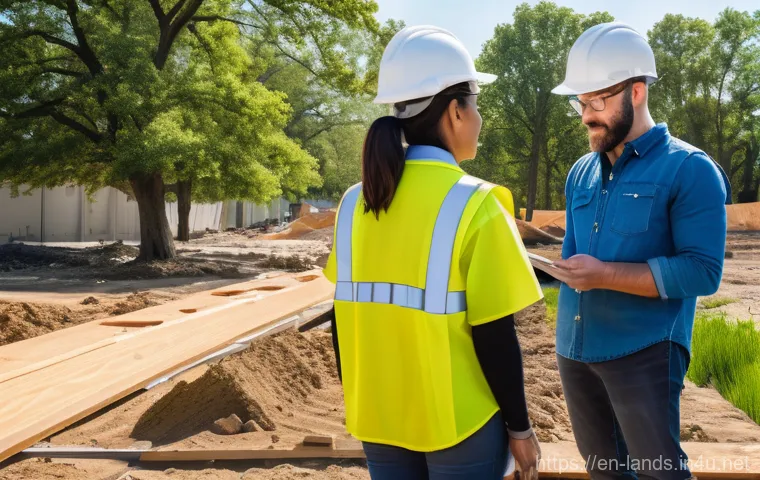
Here’s where the rubber meets the road, or perhaps more accurately, where the blueprint meets the bulldozer. While theory gives us a fantastic starting point, every single site is a unique beast with its own set of personality quirks, often unexpected ones.
I recall a project where the soil reports looked fine on paper, but once excavation began, we discovered an entire layer of undocumented construction debris buried just beneath the surface, completely throwing off our drainage plan and requiring a significant redesign on the fly.
Then there are the existing conditions – a beautiful old oak tree that absolutely *must* be preserved, even if it complicates the pedestrian flow, or an unforeseen utility line that dictates where a water feature simply cannot go.
What looks like a straightforward slope on a topographical map can, in person, present a complex drainage issue that requires an ingenious solution. These are the moments when your theoretical knowledge is truly tested, and you have to think on your feet, often needing to be a bit of a detective and a diplomat all at once.
It’s not just about applying a formula; it’s about adapting, innovating, and sometimes, even letting go of your initial grand vision to embrace a more practical, yet still beautiful, outcome tailored precisely to that specific piece of earth.
Beyond the Drawing Board: The Art of Practical Problem-Solving
Stepping out of the academic bubble and into the real world of landscape architecture felt a lot like learning to ride a bike after only ever reading manuals about cycling.
You understand the mechanics, but suddenly you’re dealing with balance, unexpected potholes, and the sheer effort of pedaling uphill. This is where the pragmatic side of design truly shines.
It’s less about the pristine theoretical ideal and more about the ingenious solutions born from gritty constraints. I’ve learned that you can have the most groundbreaking, ecologically sound design concept imaginable, but if it blows the budget out of the water or gets tangled in a web of permits, it’s never going to see the light of day.
This part of the journey is less glamorous but equally, if not more, crucial. It’s where creativity meets critical thinking in a high-stakes dance. You’re not just an artist; you become a negotiator, a project manager, and sometimes, a bit of a magician, pulling rabbits out of hats to make things work.
The ability to pivot, to innovate under pressure, and to find elegant solutions to complex, real-world problems is what truly separates a good landscape architect from an exceptional one.
It’s about making the beautiful possible, not just imagining it.
Budget Battles and Client Whispers
Oh, the budget! It’s the invisible, often formidable, hand that guides so many design decisions. I remember agonizing over a meticulously designed planting plan for a public park, only to have the client, a municipal parks department, gently remind me that their budget for trees was about a third of what I’d allocated.
It was a stark lesson in value engineering and understanding that compromise isn’t a failure, but often a pathway to creative solutions. Instead of exotic, mature specimens, we pivoted to a mix of native saplings and fast-growing shrubs that would establish quickly and provide similar ecological benefits over time, albeit with a slightly longer visual wait.
Then there are the clients themselves. Each one comes with their own dreams, their own quirks, and sometimes, their own very specific (and occasionally unrealistic) requests.
I once had a client who was absolutely set on a particular type of rare, water-intensive plant for their desert garden. My role wasn’t just to say “no,” but to educate them gently about sustainable alternatives that would thrive in their climate, showing them equally stunning options that would save them money and water in the long run.
It’s about listening deeply, translating visions into feasible plans, and sometimes, guiding expectations with a gentle, expert hand.
Navigating Regulations and Community Needs
If budgets are the invisible hand, then regulations are the often-overlooked map, guiding – and sometimes restricting – every step we take. From zoning ordinances and stormwater management mandates to accessibility requirements and tree protection bylaws, the regulatory landscape can feel like a labyrinth.
I’ve spent countless hours poring over local codes, ensuring that every curve of a pathway and every drop of water runoff complies with stringent standards.
Miss a crucial permit or misinterpret a setback rule, and you could face costly delays or, worse, having to rip out newly installed elements. It’s a painstaking but absolutely necessary part of the process.
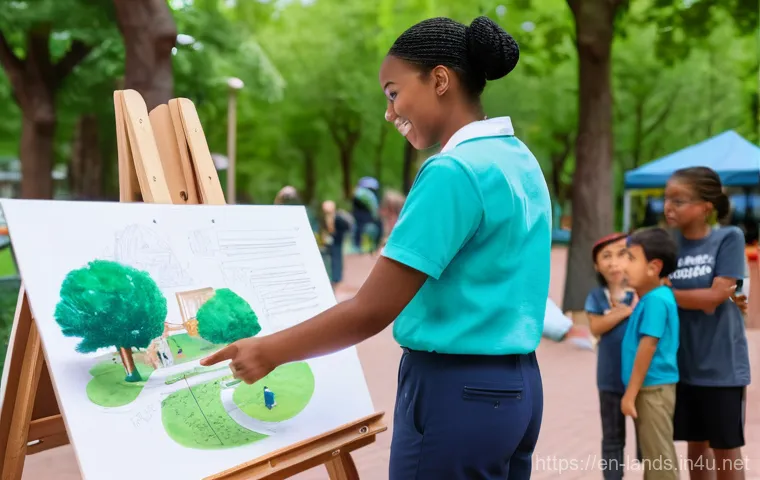
And then there’s the community. Designing public spaces, especially, means engaging with the people who will actually *use* them. I’ve learned that a beautiful design on paper can fall flat if it doesn’t resonate with the local residents.
Facilitating workshops, conducting surveys, and genuinely listening to feedback, even when it challenges your initial ideas, is paramount. I recall one contentious meeting about a new playground design where local parents had strong opinions about everything from swing types to shade structures.
Integrating their practical insights made the final design not just better, but truly *theirs*, fostering a sense of ownership that money simply can’t buy.
Learning from the Living Lab: When Theory Takes Root
It’s one thing to sketch a gorgeous planting scheme on paper, carefully selecting species based on their ecological benefits, aesthetic appeal, and hardiness zones.
It’s an entirely different, and frankly, more humbling experience, to see those plants actually go into the ground. That moment, when the theory literally takes root, is when you truly begin to understand the nuances that no textbook can fully convey.
This phase of a project is a living laboratory, a dynamic interplay between design intent and the stubborn, beautiful realities of the natural world. I’ve personally felt the sting of a carefully chosen plant selection failing to thrive due to an unforeseen microclimate, or the unexpected joy of seeing a seemingly minor design detail blossom into a beloved community gathering spot.
It’s a continuous learning curve, where every project, every site, offers new lessons. This is where the long-term thinking truly kicks in, moving beyond the immediate gratification of a completed project to consider its evolution, its resilience, and its enduring impact.
It’s where you learn that a truly successful landscape isn’t just designed; it’s nurtured, adapted, and loved.
The Unsung Heroes: Construction and Implementation
While the design phase often gets all the glory, the construction and implementation phase is where the real muscle is flexed. This is where plans transform from lines on a page into tangible forms and textures.
I’ve spent countless hours on construction sites, watching contractors painstakingly shape earth, lay pavers, and install intricate irrigation systems.
It’s a constant dialogue between the designer’s vision and the builder’s expertise, often involving quick decisions and on-the-spot problem-solving. There was one time, during the installation of a complex tiered fountain, where the chosen stone proved unexpectedly difficult to cut precisely on-site.
We had to work closely with the stonemasons, adapting the joint patterns slightly while preserving the overall aesthetic, a testament to collaborative ingenuity.
Seeing the transformation, from a raw site to a sculpted landscape, is incredibly rewarding. It’s also where you realize the immense value of clear construction drawings and specifications – the better your plans, the smoother the implementation.
But even with the most perfect plans, unexpected challenges always arise, and that’s where strong communication and mutual respect between designers and contractors become absolutely invaluable.
They are, after all, the unsung heroes bringing our visions to life.
Post-Occupancy Evaluation: What Really Works?
After all the dust settles and the ribbon is cut, many designers move on to the next project. But I’ve found that some of the most profound learning happens *after* a space is officially “complete” through what we call Post-Occupancy Evaluation (POE).
This is where you go back, sometimes months or even years later, to see how the landscape is actually performing, how people are using it, and how it’s aging.
Did that innovative stormwater planter really capture runoff as effectively as we modeled? Are people actually lingering in the seating areas we designed, or are they walking right past them?
I remember designing a quiet contemplative garden, only to return a year later and find it had become the favorite spot for local kids to play hide-and-seek, leading to some wear and tear we hadn’t anticipated.
It taught me a crucial lesson about the often-unpredictable human element and the dynamic nature of public spaces. POE is invaluable because it provides concrete feedback, allowing us to refine our theoretical approaches and practical methodologies for future projects.
It’s the ultimate reality check, showing us what genuinely works, what needs adjustment, and how our designs are truly impacting the lives of the people and the ecology of the place.
Crafting Lasting Legacies: Sustainability in Action
In today’s world, sustainability isn’t just a buzzword; it’s an imperative, especially in landscape architecture. It’s no longer enough to create beautiful spaces; we must also ensure they are ecologically sound, economically viable, and socially equitable for the long haul.
This commitment to sustainability is where theory and practice truly intertwine in the most meaningful way, guiding every decision from material selection to water management.
For me, it has become the ethical backbone of my work. I’ve realized that the landscapes we design today are not just for us; they are legacies we leave for future generations, and we have a profound responsibility to ensure those legacies are positive ones.
It’s about thinking beyond the immediate project timeline and considering the entire lifecycle of a landscape, its inputs and outputs, and its ongoing impact on both the environment and the community it serves.
This kind of holistic thinking, deeply rooted in sustainable principles, is what truly elevates landscape architecture from mere aesthetics to a powerful force for good in the world.
Ecological Engineering in Practice
The theoretical concepts of ecological engineering are incredibly inspiring – designing systems that mimic nature’s efficiency, promoting biodiversity, and restoring degraded ecosystems.
But bringing these ideas to life on a project site requires a deep dive into practical application. I’ve worked on projects where we’ve designed intricate bioretention swales and rain gardens to manage stormwater naturally, filtering pollutants and recharging groundwater.
It wasn’t just about digging a ditch; it involved precise calculations of catchment areas, soil permeability, and carefully selected native plant palettes that could withstand both inundation and drought.
One memorable experience involved creating a constructed wetland to treat greywater from a new development. The science behind it was complex, but seeing the wetland flourish, attracting local wildlife and visibly purifying the water, was immensely satisfying.
It underscored the power of practical ecological engineering – turning potential problems into vibrant, functional ecosystems. It requires a blend of scientific understanding, design creativity, and a willingness to get hands-on with the earth itself.
Future-Proofing Our Green Spaces
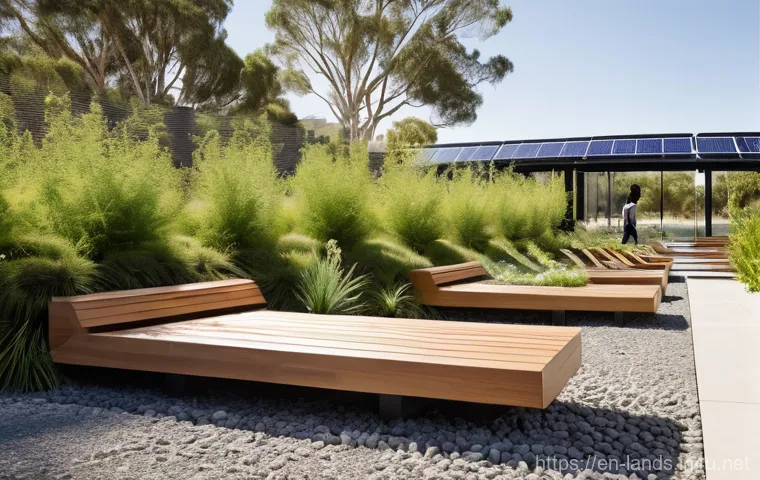
With climate change already impacting our communities, future-proofing our green spaces is no longer an option; it’s a necessity. This means designing landscapes that can adapt to more extreme weather events, conserve precious resources, and contribute to urban resilience.
I’ve found myself increasingly focused on incorporating strategies like drought-tolerant planting, permeable paving to reduce heat island effect and manage flash floods, and integrating robust urban tree canopies for shade and air quality improvement.
On one particular project in a coastal city, we had to design a park that could withstand potential sea-level rise and increased storm surges. This involved elevating critical infrastructure, utilizing salt-tolerant vegetation, and creating dynamic edges that could adapt to changing water levels.
It’s a challenging but incredibly vital aspect of modern landscape architecture, pushing us to think innovatively and consider long-term ecological and social impacts.
It’s about creating spaces that are not only beautiful today but will also continue to thrive and serve their communities effectively decades down the line.
The Human Touch: Designing for Experience and Well-being
While we often talk about ecological systems and sustainability, let’s not forget the most important element in any landscape design: people. After all, what’s the point of creating stunning, functional spaces if they don’t enhance human experience and well-being?
This is where the true art of landscape architecture comes alive – understanding human behavior, emotions, and needs, and then translating that understanding into tangible, livable environments.
I’ve come to believe that the most successful landscapes aren’t just seen; they’re felt. They invite interaction, foster connection, and provide solace.
From the gentle curve of a path that naturally guides you through a garden to the perfectly placed bench that offers a moment of quiet reflection, these are the subtle touches that transform a mere space into a meaningful place.
It’s about creating sensory experiences, promoting physical activity, and nurturing mental health. This human-centric approach is what truly distinguishes thoughtful design from just pretty pictures, making our work profoundly impactful on daily lives.
Biophilia in the Built Environment
The concept of biophilia – our innate human connection to nature – isn’t just a theory; it’s something I’ve seen come alive in countless projects. When I design, I’m constantly thinking about how to weave natural elements into the urban fabric to create restorative and engaging experiences.
For instance, incorporating water features isn’t just for aesthetics; the sound of trickling water can mask urban noise and reduce stress. Green walls and extensive planting bring nature closer, even in dense city centers, improving air quality and providing a visual respite.
I remember working on a corporate campus where we designed a series of outdoor ‘work pods’ nestled within lush gardens. Employees told me how much they valued having a natural setting to take calls or brainstorm, feeling more focused and less stressed than when confined indoors.
It’s about more than just adding plants; it’s about thoughtfully integrating natural patterns, light, air, and materials to evoke a sense of calm and connection that genuinely enhances people’s daily lives and productivity.
Community Engagement: Beyond the ‘Why’ to the ‘How’
Designing for communities means truly involving the community, and this goes far beyond simply informing them about a project. It’s about moving from explaining ‘why’ we’re doing something to actively collaborating on ‘how’ it will be done.
I’ve found that some of the most innovative and successful design elements have emerged directly from community feedback sessions. For example, during the planning for a neighborhood park, residents expressed a strong desire for a space that felt truly safe and welcoming for all ages, but especially for teenagers who often felt overlooked.
Their input led to the inclusion of a dedicated multi-purpose court and a shaded hangout zone with charging stations, features that I might not have prioritized as much without their direct input.
These aren’t just superficial additions; they foster a profound sense of ownership and pride within the community, ensuring the space is not only used but cherished and respected for years to come.
It’s a powerful lesson in humility and the collective wisdom of those who will ultimately inhabit the spaces we create.
Evolving Horizons: Technology and the Next Wave of Landscape Innovation
Just when you think you’ve got a handle on things, the world of technology throws in a new curveball – or in our case, a new tool that utterly transforms how we approach design and execution.
The landscape architecture profession, while deeply rooted in ecological principles and human well-being, is also incredibly dynamic, constantly evolving with technological advancements.
It’s like having new superpowers added to your toolkit almost regularly! I remember the early days of CAD, and thinking how revolutionary it was. Now, we’re talking about virtual reality walk-throughs, drone-based site analysis, and sophisticated hydrological modeling software.
For me, embracing these innovations isn’t about replacing the human element or our foundational design principles; it’s about enhancing our capabilities, allowing us to visualize, analyze, and communicate our designs with unprecedented precision and immersive detail.
It means we can tackle more complex challenges, explore more creative solutions, and ultimately, design better, more resilient, and more inspiring landscapes for the future.
Digital Tools and Collaborative Workflows
The digital revolution has profoundly impacted how we work, making collaboration smoother and our design presentations more impactful. Gone are the days of hand-drawing every detail for client reviews (though I still love a good sketch!).
Now, we utilize advanced 3D modeling software that allows clients to “walk through” a proposed design in virtual reality, experiencing the space before a single shovel hits the ground.
This immersive experience is invaluable for gathering feedback and ensuring alignment. Beyond visualization, tools for geographic information systems (GIS) enable us to analyze vast amounts of environmental data, from soil composition to flood plains, with incredible accuracy, informing our design decisions with robust scientific backing.
And let’s not forget the power of cloud-based platforms that allow entire design teams, often dispersed across different cities or even continents, to work simultaneously on a single project, streamlining workflows and accelerating timelines.
I’ve personally seen how these digital tools transform a complex, multi-stakeholder project from a potential headache into a remarkably efficient and collaborative endeavor, pushing the boundaries of what we can achieve.
Smart Landscapes and Climate Resilience
The intersection of technology and landscape architecture is truly exciting when it comes to creating ‘smart landscapes’ – spaces that are not just beautiful but also intelligently managed and resilient in the face of environmental challenges.
We’re now designing landscapes that can ‘think’ for themselves, thanks to integrated sensors and automated systems. Imagine irrigation systems that adjust watering schedules based on real-time weather data and soil moisture levels, significantly conserving water.
Or urban parks equipped with sensors that monitor air quality, providing vital data to city planners. I’ve been fascinated by projects integrating advanced green infrastructure, where smart technology helps manage stormwater more effectively, predicting flood risks and optimizing drainage.
This is particularly crucial as we face more unpredictable climate patterns. These smart solutions aren’t just about efficiency; they’re about creating living systems that are more robust, more adaptive, and ultimately, more sustainable.
It’s about leveraging the best of human ingenuity and technological prowess to create landscapes that can not only withstand the challenges of tomorrow but actively contribute to a healthier planet.
| Aspect of Landscape Architecture | Theoretical Framework | Practical Application |
|---|---|---|
| Site Analysis | Principles of hydrology, geology, ecology, and climatology to understand environmental conditions and constraints. | On-site investigations, soil testing, surveying existing utilities, stakeholder interviews, adapting to unexpected ground conditions (e.g., hidden debris). |
| Design Principles | Concepts of form, function, scale, proportion, balance, unity, and rhythm to create aesthetically pleasing and purposeful spaces. | Applying principles while adhering to budget limitations, constructability, client preferences, and regulatory requirements; real-time problem-solving on site. |
| Sustainability | Theories of ecological restoration, regenerative design, biophilia, and resource conservation to minimize environmental impact. | Selecting drought-tolerant native plants, designing efficient irrigation, incorporating permeable paving, managing stormwater, using recycled materials, long-term maintenance planning. |
| Community Engagement | Sociological theories of public space, participation, and user experience to foster inclusive and functional environments. | Conducting workshops, facilitating public meetings, incorporating diverse community feedback into design iterations, mediating conflicting interests, building consensus. |
| Technology Use | Understanding of GIS, CAD, BIM, and simulation software capabilities for analysis, modeling, and visualization. | Using drones for site mapping, creating virtual reality walkthroughs for clients, collaborating on cloud-based platforms, implementing smart irrigation sensors. |
Closing Thoughts
Whew! What a ride it’s been, exploring the incredible journey from the initial sparks of an idea on paper to the vibrant, breathing landscapes that shape our daily lives.
As someone who’s truly lived these experiences, from those late nights poring over ecological reports to the exhilarating moments of seeing a complex design finally come to life on site, I can tell you it’s a field that constantly challenges, inspires, and rewards.
It’s a beautiful dance between the grand vision and the gritty reality, a continuous negotiation with budgets, regulations, and Mother Nature herself.
But that’s precisely where the magic happens – where creativity, practicality, and a deep sense of purpose intertwine to craft spaces that aren’t just visually stunning, but also deeply resilient, functional, and profoundly impactful on human well-being.
Every project, every challenge, is an opportunity to learn, to grow, and to leave a lasting, positive mark on the world. It’s more than just design; it’s about nurturing environments that truly flourish and enrich the lives of everyone who encounters them, making our communities healthier, happier, and more connected to the natural world.
It’s a commitment to creating legacies, one thoughtfully designed space at a time, and it’s a journey I wouldn’t trade for anything.
Useful Information to Keep in Mind
1.
Never Underestimate Site-Specific Nuances: While theoretical knowledge provides an invaluable foundation, every piece of land has its own unique personality and hidden quirks. Always conduct thorough on-site investigations, embrace flexibility in your design process, and be prepared to adapt your brilliant plans to the ground reality – whether it’s unexpected soil conditions, undocumented utilities, or a beloved existing tree that absolutely must be preserved. The most successful designs often come from intelligently responding to these unique constraints rather than ignoring them.
2.
Master the Art of Communication and Collaboration: Landscape architecture isn’t a solitary pursuit. You’ll constantly be interacting with clients, engineers, contractors, city officials, and community members. Learning to clearly articulate your vision, actively listen to diverse perspectives, and skillfully negotiate compromises is as crucial as your design skills. Building strong relationships and fostering a collaborative spirit ensures smoother project execution and ultimately, more cherished outcomes that truly serve everyone involved.
3.
Prioritize Long-Term Stewardship Over Short-Term Aesthetics: A truly sustainable landscape goes beyond initial installation; it considers the entire lifecycle. When choosing plants, materials, and systems, think about maintenance requirements, water usage, climate resilience, and how the space will age and evolve over decades. Designing for longevity, adaptability, and minimal resource consumption ensures your creations remain vibrant assets rather than future liabilities, contributing positively to both the environment and community well-being.
4.
Embrace Technology as an Enhancement, Not a Replacement: From advanced GIS mapping and 3D visualization tools to drone surveys and smart irrigation systems, technology is rapidly transforming our field. These tools aren’t meant to diminish the human touch or creative spirit but to empower us with greater analytical capabilities, more precise execution, and more compelling ways to present our ideas. Integrating these innovations allows for more complex, efficient, and future-proof designs that address modern challenges with cutting-edge solutions.
5.
Connect with the Human Element – Always: At its core, our work is about creating spaces for people. Whether it’s a bustling urban park, a quiet contemplative garden, or a vibrant community plaza, always consider how individuals will interact with, experience, and feel within your designs. Incorporate elements that foster connection, encourage activity, and promote well-being. A landscape’s true success is measured not just by its beauty, but by its ability to enrich human lives and build stronger, healthier communities.
Key Takeaways
So, to sum it all up, our fascinating journey in landscape architecture is a testament to the powerful synergy between academic wisdom and real-world application.
It’s a dynamic field that constantly pushes us to merge artistic vision with scientific rigor, ensuring our designs are not only beautiful but also ecologically sound and socially responsible.
The core takeaways from navigating this exciting landscape are clear: embrace flexibility, prioritize collaborative problem-solving, and always keep the long-term health of both the environment and the community at the forefront of every decision.
This profession isn’t just about creating pretty pictures; it’s about crafting enduring legacies, designing spaces that actively contribute to a healthier planet and enrich the daily lives of countless individuals.
It’s a powerful role, demanding a blend of creativity, technical expertise, and a deep, unwavering commitment to shaping a more sustainable and vibrant future, one thoughtfully designed green space at a time.
Frequently Asked Questions (FAQ) 📖
Q: What’s the biggest shock when those beautiful theoretical designs hit the real world?
A: Oh, this is a fantastic question, and one I get asked all the time! You know that feeling when you’ve got this incredible vision on paper, every line perfect, every plant species thriving in your ideal ecosystem?
Then you step onto the actual site, and bam! Reality check. For me, the biggest shock often comes down to the sheer unpredictability of existing site conditions and the ever-present constraints of a budget.
We might draw up plans for a serene water feature, only to discover a complex network of underground utilities that makes it financially or logistically impossible.
Or perhaps the soil quality isn’t what the preliminary reports suggested, meaning our carefully selected plant palette needs a complete overhaul. And let’s not even get started on the sudden, unexpected client change requests mid-project!
It’s a constant negotiation, a dance between what’s ideal and what’s achievable, and honestly, that’s where the real problem-solving—and sometimes the real magic—happens.
It teaches you adaptability and truly hones your practical skills in ways no textbook ever could.
Q: How do you balance the artistic vision with all those tricky practical considerations like budgets and climate challenges?
A: This is where the art truly meets the science, isn’t it? It’s probably the most frequent tightrope walk in our profession. My personal approach is to always start with the core artistic and ecological vision – what is the soul of this space?
What feeling do we want to evoke, and what environmental benefits are we aiming for? Then, you bring in the practicalities. Budgets are a constant companion, so it becomes a process of creative prioritization.
Can we achieve a similar aesthetic with locally sourced, less expensive materials that also have a lower carbon footprint? Absolutely. Climate change, especially, has completely reshaped how we design.
We’re not just thinking about a beautiful garden anymore; we’re designing for resilience – incorporating drought-tolerant planting in arid regions, creating permeable surfaces to manage stormwater in urban settings, and ensuring tree canopies provide real cooling benefits.
It’s about being innovative, finding solutions that are not just beautiful but also functional, sustainable, and fiscally responsible. It’s an iterative process, constantly refining the design through feedback and adapting to new information.
You learn to make every dollar and every design decision work twice as hard.
Q: What’s the most rewarding moment when you see a theoretical concept truly come to life on the ground?
A: Oh, there’s nothing quite like it! It’s truly something else to see months, sometimes years, of theoretical planning, sketches, and detailed drawings finally materialize into a tangible space.
For me, the most rewarding moment isn’t just the ribbon-cutting ceremony, though those are fun! It’s when you return to a completed project, perhaps a few months or even a year later, and you see people genuinely using and enjoying the space in ways you might not have explicitly designed for, but instinctively hoped for.
Maybe it’s a family having a picnic under a shade tree you specified, or kids laughing as they explore a natural play area, or even just someone quietly reading on a bench you placed perfectly.
And when the plants have matured, the ecosystem you envisioned begins to truly flourish, attracting local wildlife – that’s just pure joy. It’s seeing the space become alive, integrated into the community, and fulfilling its purpose not just aesthetically, but functionally, socially, and ecologically.
That’s when all the theoretical groundwork and practical hurdles feel completely worth it. It truly validates the power of thoughtful design.